Methods for governing multi-component relationships, controlling instance suppression, and enforcing subassembly compatibility across parametric models.
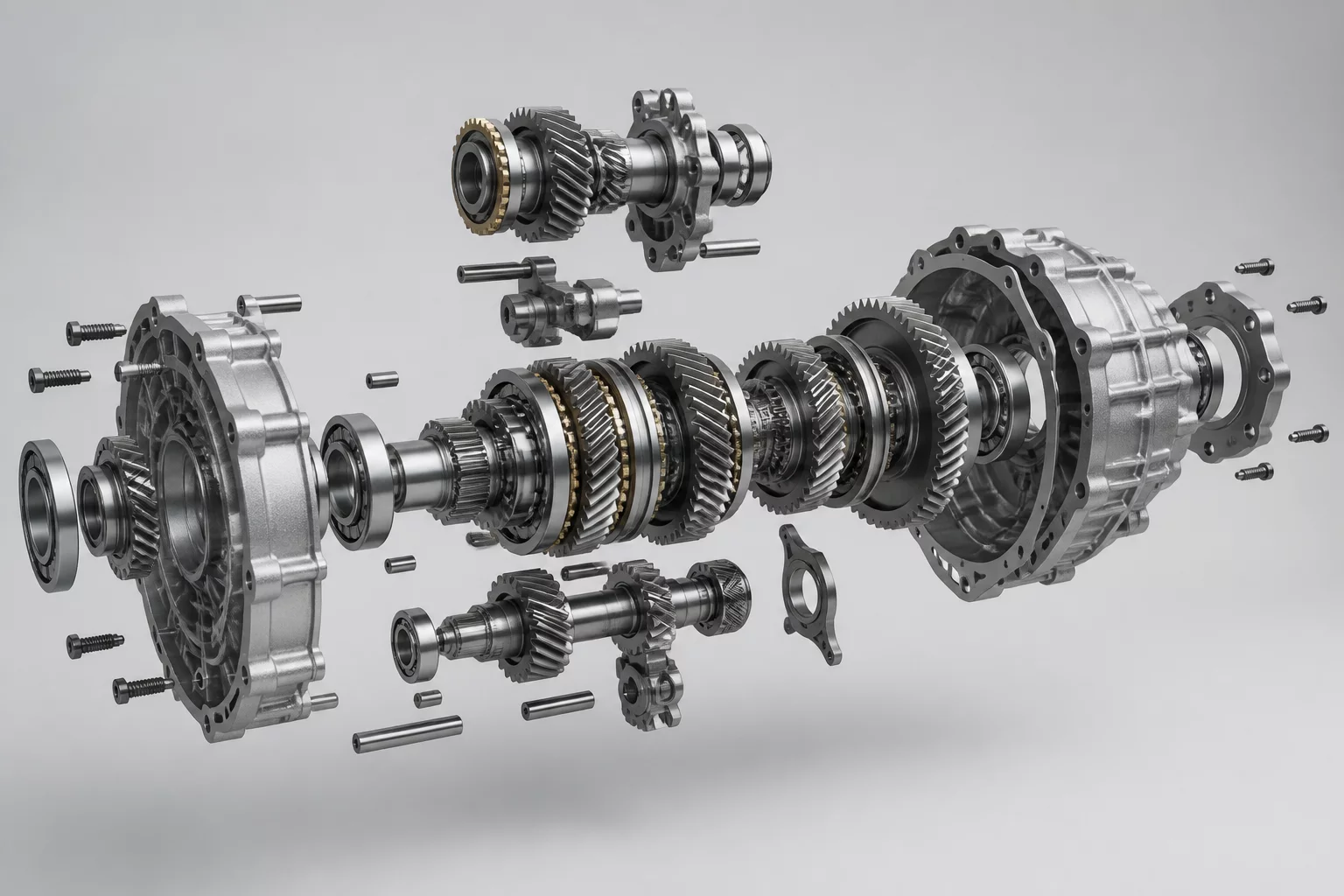
Assembly-level configuration rules coordinate how parts and subassemblies interact when top-level parameters change. Unlike part studio rules that manipulate single-body features or dimensions, assembly rules dictate component presence, quantity, active configurations of inserted instances, and mating constraints. Establishing these rules early prevents downstream drafting conflicts and bill-of-materials corruption.
Top-level variants frequently require swapping entire subassemblies rather than individual components. Systematically structuring these rule tables allows engineering teams to define clean boundary logic where child instances inherit upstream parameter values seamlessly, ensuring that mechanical clearances and load paths remain structurally sound.
Creating reliable assembly rules begins by identifying which components are permanent structural fixtures and which items are conditional variants. Once isolated, the conditional items are linked to a single configuration matrix or boolean toggle table. This ensures that suppressing a primary bracket simultaneously suppresses its associated fasteners and secondary brackets.
Always bind hardware fasteners and positional mate connectors directly to the primary mounting instance's suppression state. If the parent bracket is suppressed by a variant rule, all dependent bolts, washers, and kinematic mates must suppress automatically to eliminate detached mate warnings and broken assembly references.
After defining suppression conditions, assign explicit configuration inputs to child subassemblies. For instance, when an enclosure switches from standard to heavy-duty, the internal mounting rail subassembly must receive the matching width and load-rating parameters automatically through the assembly configuration panel.
Link fastener groups and hardware kits to their corresponding parent component state to avoid dangling mates.
Drive subassembly configuration parameters from top-level assembly inputs rather than manual overrides.
Validate every matrix branch in isolation to confirm accurate quantities in generated bills of materials.
Anna White is a mechanical systems architect specializing in modular CAD frameworks, complex variant matrices, and automated bill-of-materials pipelines.
Techniques for toggling CAD features cleanly across varying parametric states.

Systematic methods to detect and prune conflicting variant states.

Establishing boundary constraints to avoid geometric collapse in configurable components.