Establishing clear modular parameters, topological limits, and structural boundaries to keep parametric CAD models stable, maintainable, and manufacturable.

Parametric configurators fail when teams force fundamentally distinct products into one single overarching model file. A product family boundary represents the exact dividing line where variable parameters stop being configuration toggles and become entirely distinct mechanical architectures. Setting this line early protects Part Studios and Assembly models from recursive rebuild errors, cyclical references, and uncontrollable complexity.
When a single CAD file attempts to govern incompatible frame sizes, divergent manufacturing methods, and mismatched internal components, update times climb exponentially. Establishing a tight boundary isolates common parametric DNA while segregating diverging branches into dedicated modular sub-assemblies.
To determine whether a proposed variation belongs inside the current product family or requires an independent root assembly, engineering teams apply four specific boundary gates. If a variant breaks standard tooling setups or introduces conflicting mate interfaces, it is bifurcated into a separate product tree rather than overloaded into existing feature tables.
A product family must maintain unbroken reference topology across all configurations. If an optional feature alters the primary locating datum or requires contradictory mounting planes, it belongs outside the family boundary.
Applying these gates ensures every configuration option drives real manufacturing distinctions without breaking downstream drawings, bill of materials tables, or automated CAM toolpaths.
Maintain topological continuity across all configuration states rather than toggling core mounting datums.
Segregate divergent manufacturing methods into separate part files rather than suppressing fifty percent of features per variant.
Isolate fast-moving customer options from deep structural base logic to guarantee sub-second configuration regeneration.
James Wilson specializes in CAD automation, parametric configurators, and modular engineering structures across cloud platforms.

Separate primary driver variables from dependent derived dimensions to prevent circular solver loops.
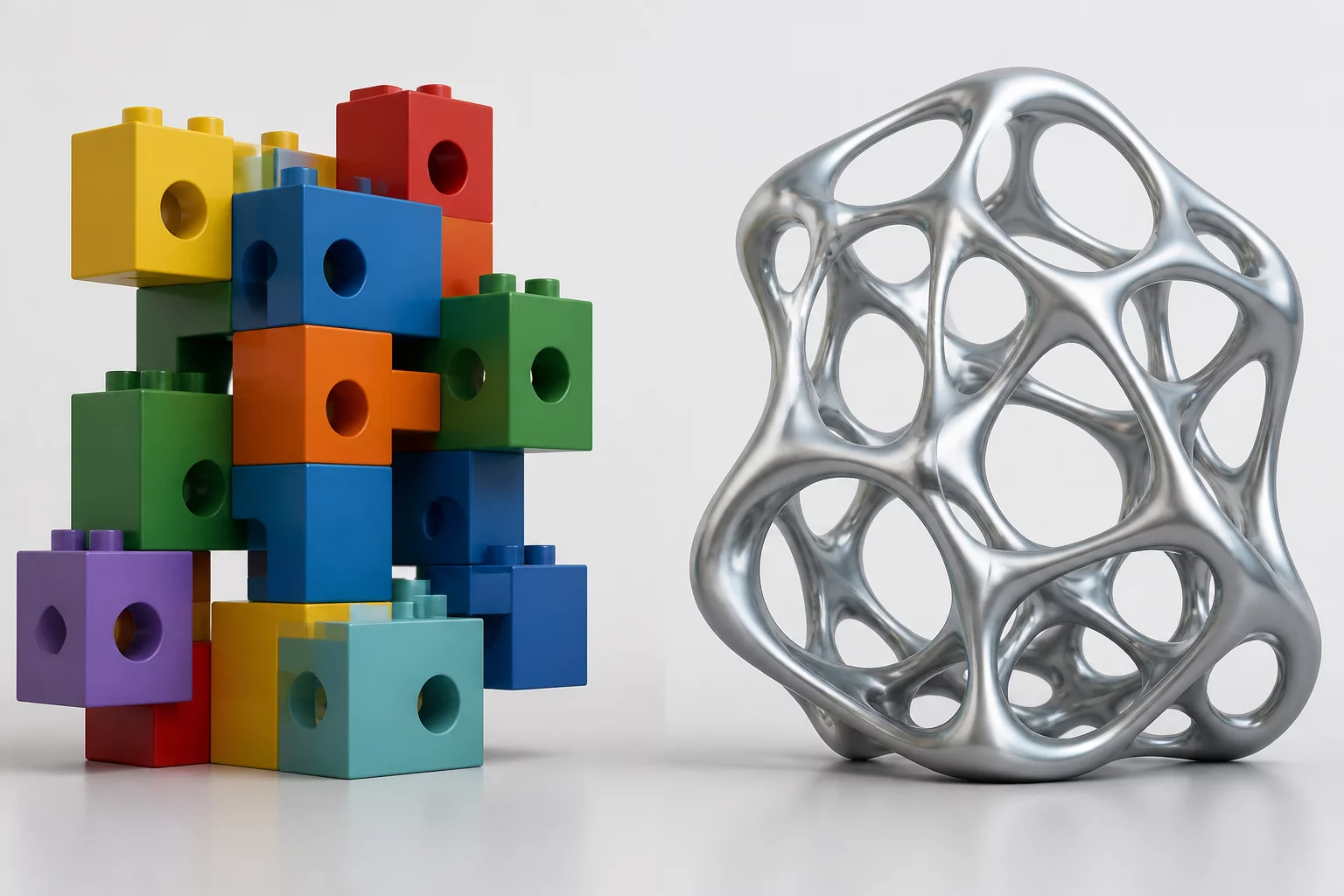
Discover when to swap modular sub-assemblies versus driving geometry with parametric expressions.

Master the structural differences between discrete option tables and continuous variable configurations.