Distinguishing geometric modeling envelopes from viable market catalog configurations prevents variant bloat, tooling conflicts, and unnecessary manufacturing overhead.

In parametric CAD architecture, what a geometry kernel can mathematically generate differs greatly from what an enterprise can profitably manufacture and support. A CAD model might comfortably stretch an enclosure from 100 millimeters to 3,000 millimeters without rebuilding errors. However, commercial logistics, tooling sizes, sheet stock dimensions, and standard shipping crates enforce an entirely different envelope.
Confusing physical geometric limits with commercial boundaries leads directly to configuration sprawl. Engineering teams often expose full continuous parametric ranges to configurators, resulting in orders for fractional dimensions that demand manual fabrication instead of standard stamped inventory. Clean product architecture establishes two distinct limit tiers: hard physical constraints where geometry breaks, and discrete commercial limits where catalog offerings operate.
To maintain clean configurator logic, CAD models encapsulate mathematical bounds in underlying expressions or parametric sketches, while exposing only standard discrete values or bounded step-increments to commercial tables. Physical bounds define structural safety, wall thickness minimums, draft angles, and clearance envelopes.
Maintain geometric regeneration bounds inside the core CAD part studio to prevent model regeneration failure, but govern upstream customer selections via discrete configuration tables matched strictly to standard tooling, stocked raw materials, and verified SKU matrices.
When special non-standard orders arise, engineering can safely evaluate custom dimensions because the model physical boundary guarantees structural soundness. Meanwhile, the vast majority of standard orders flow automatically through pre-validated commercial option forks without engineering intervention.
Define inner physical limits in CAD expressions to prevent zero-thickness geometry, self-intersecting sweeps, or impossible bend radii during automated regeneration.
Restrict commercial configurations to discrete tables reflecting standard material sheet sizes, pre-punched tooling patterns, and established logistics envelopes.
Decouple configurator dropdowns from open continuous sliders, channeling custom dimensional requests through dedicated engineer-to-order workflow gates.
Emily Davis specializes in CAD configuration logic, parametric enclosure design, and standardizing product architecture across cloud-native engineering environments.

Establish clear outer limits for product families before generating complex variant tables.

Balance modular sub-assemblies with continuous parametric scaling for scalable product platforms.
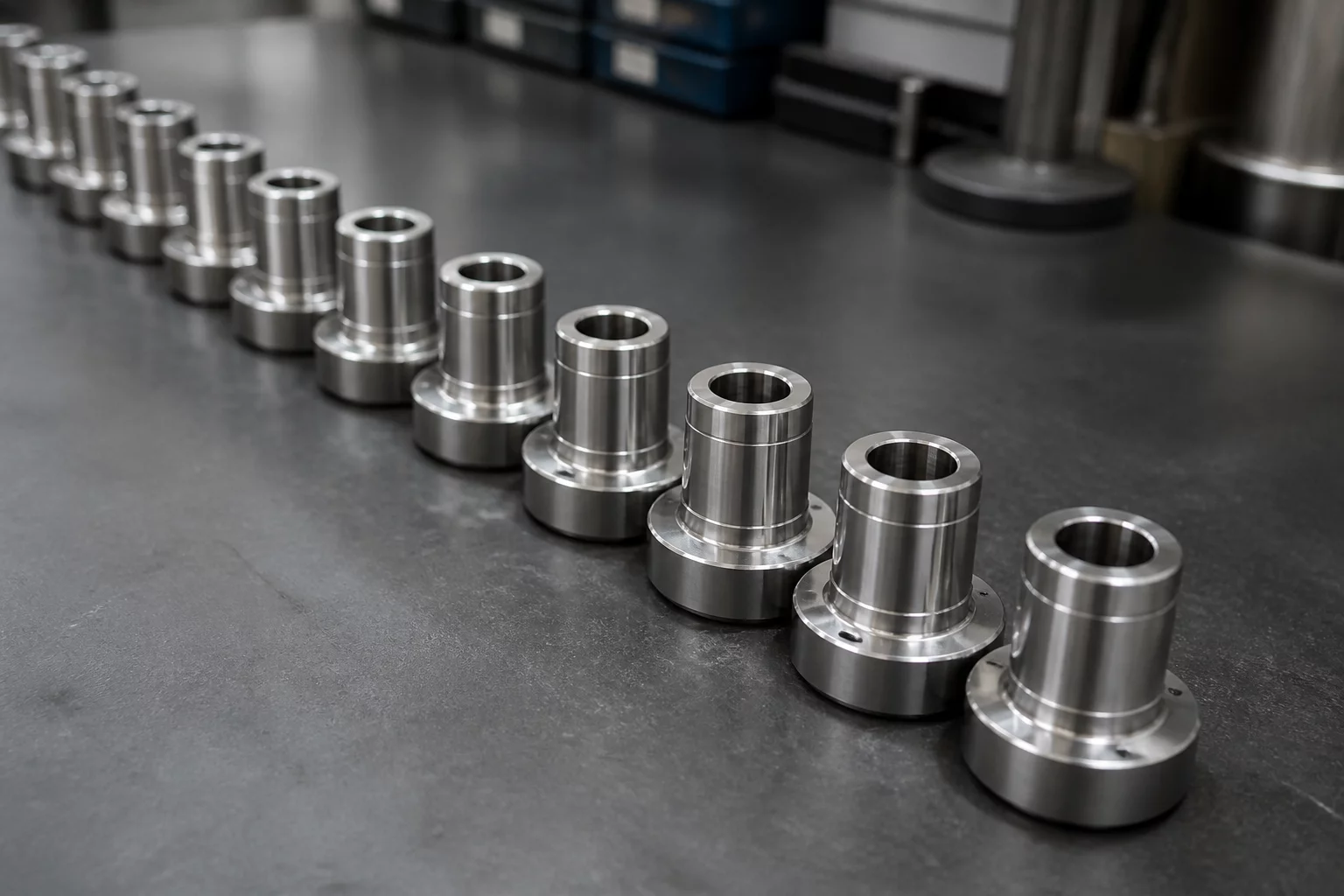
Practical patterns to standardize legitimate catalog variants and prune redundant configurations.